
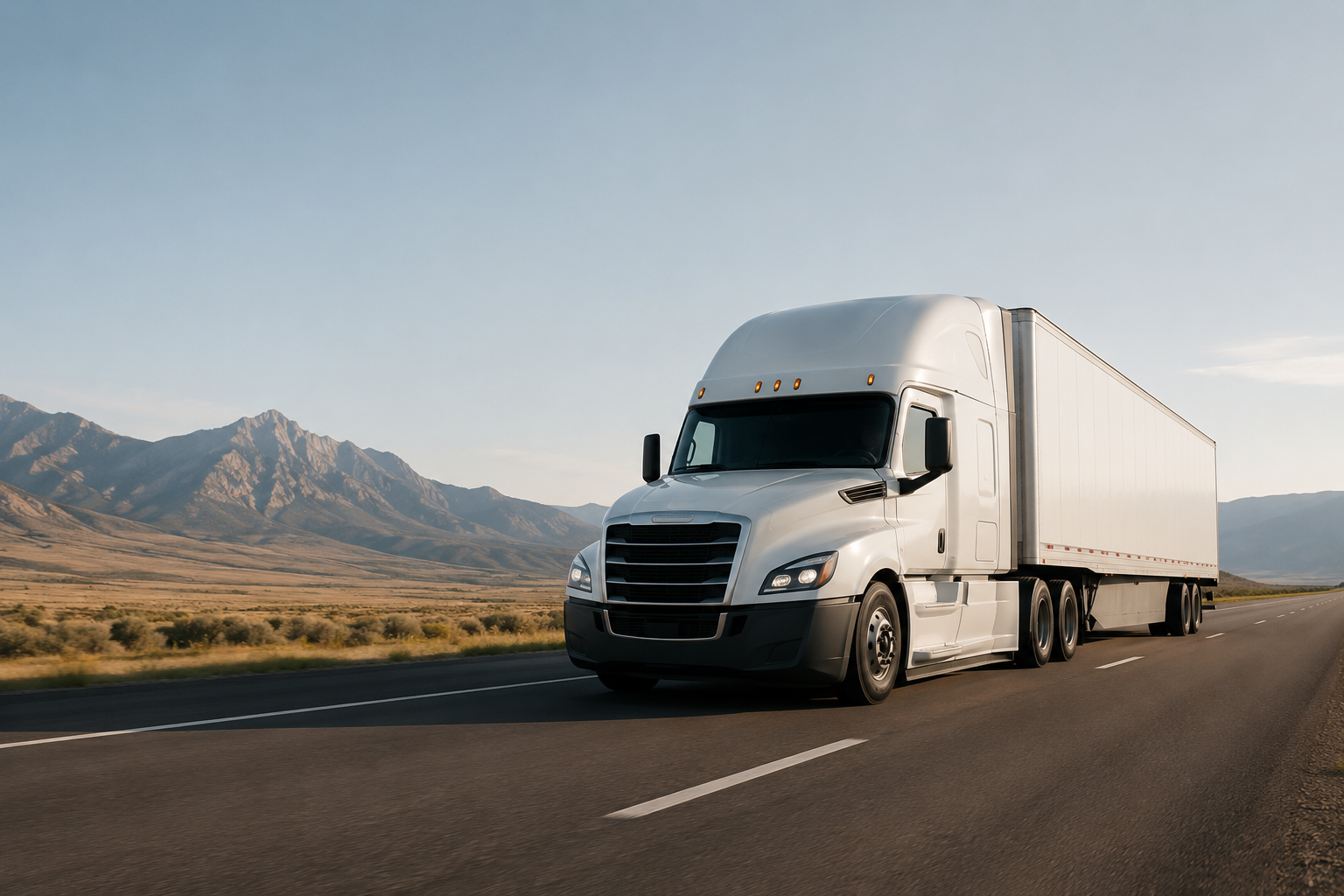
Trucking insurance is a group of commercial insurance policies that protect truck drivers and motor carriers from financial losses caused by accidents, cargo damage, liability claims, and other risks that come with running a trucking business.
Rather than one all-in-one policy, trucking insurance is a package of separate coverages, each protecting a different part of your operation. Knowing what each piece covers, who needs it, and how the buying process works makes it much easier to get the right protection without paying for coverage you don’t need.
Let’s walk through it, piece by piece, starting with what’s covered.
What Does Trucking Insurance Cover?
Trucking insurance typically includes five core coverage types, each protecting a different part of your operation:
- Primary liability
- Physical damage
- Cargo coverage
- Bobtail insurance
- Workers’ compensation
Which of these you need depends on your operation.
Primary liability covers damage or injuries you cause to other people or their property in an accident. This is required for most interstate motor carriers and is also required by many states for intrastate commercial trucking.
Physical damage covers your own truck if it’s damaged in a collision, fire, theft, or other covered event.
Cargo insurance covers the freight you’re hauling if it’s lost, stolen, or damaged in transit.
Bobtail insurance covers your truck when you’re driving it without a trailer, and you’re not currently dispatched for a carrier, say, heading home after a drop-off. If you’re trailer-less but still on dispatch, that’s typically covered by the motor carrier’s policy instead.
Workers’ compensation covers medical costs and lost wages for employee drivers who are injured on the job. This only applies if you have employees, not if you’re an owner-operator working alone.
Trucking Insurance Coverage at a Glance
| Coverage Type | What It Protects |
|---|---|
| Primary liability | Damage or injuries to others |
| Physical damage | Your truck |
| Cargo | Freight |
| Bobtail | Truck while not under dispatch |
| Workers’ compensation | Employee drivers |
Who Needs Trucking Insurance?
Nearly anyone operating a commercial truck needs some form of trucking insurance, though exact requirements vary by setup:
- Owner-operators need liability, physical damage, and cargo coverage at minimum
- Leased operators often need bobtail and non-trucking liability on their own
- Fleets need all of the above, scaled across every truck
- Companies with employee drivers also need workers’ compensation
Leased operators working under someone else’s authority may have some coverage provided by the carrier they’re leased to, but that coverage usually only applies while they’re actively dispatched, which is why bobtail and non-trucking liability fill the gap.
Workers’ compensation requirements vary by state, and some states don’t mandate it for private employers at all. Check your state’s rules once you have your first employee driver on payroll.
How Does Trucking Insurance Work?
Trucking insurance works through a straightforward process: you request a quote by sharing details about your business, an independent agency shops that information across multiple carriers, you compare the policy options that come back, you purchase the coverage that fits, and your policy renews annually unless you update it sooner.
Say a two-truck owner-operator hauling dry freight in Iowa requests a quote. An independent agency working with several carriers might come back with two or three different policy options at different price points and coverage levels, instead of a single take-it-or-leave-it quote.
Now compare that to an eight-truck refrigerated fleet in Ohio: the same shopping process applies, but the agency is also weighing factors like multiple drivers’ safety records and temperature-controlled cargo risk across every truck in the fleet. In both cases, that comparison is where most of the value in shopping around shows up.
Once you choose a policy, coverage begins on the effective date you agree to, and you’ll typically renew annually. Most agencies also let you update your policy anytime your business changes, like adding a truck or a driver, without waiting for renewal. A dedicated account team and a 24/7 self-service portal make that maintenance step easier, since you’re not stuck waiting on a callback for something like a certificate of insurance.
How the Trucking Insurance Process Works
| Step | What Happens |
|---|---|
| Request a quote | Share information about your business |
| Compare policies | Review coverage and pricing |
| Purchase coverage | Choose the best fit |
| Maintain your policy | Make updates as your business changes |
| Renew | Review annually |
What Factors Affect Your Premium?
Several factors affect what you pay for trucking insurance, including your number of trucks, the type of cargo you haul, your drivers’ safety history, your operating radius, and how long you’ve been in business. Carriers weigh these factors together when calculating your premium.
A carrier hauling hazardous materials over long interstate routes will generally see a different premium than a local carrier hauling general freight with a clean safety record. Claims history matters too: a driver or fleet with a track record of fewer accidents typically qualifies for lower rates over time.
What Affects Your Trucking Insurance Premium
| Factor | How It Affects Your Premium |
|---|---|
| Number of trucks | More trucks generally means higher total premium, but often a lower per-truck rate |
| Cargo hauled | Hazardous or high-value freight typically costs more to insure than general freight |
| Driver history | Clean safety records lower your rate; violations or accidents raise it |
| Operating radius | Long-haul, multi-state routes usually cost more than local, short-radius routes |
| Claims history | Fewer past claims generally leads to lower renewal rates over time |
Frequently Asked Questions
Is trucking insurance required?
Yes, in most cases. Federal law sets minimum liability requirements for most interstate motor carriers. Cargo insurance isn’t federally mandated for most freight carriers, but it’s often required by the shippers or brokers you contract with.
How much trucking insurance do I need?
It depends on your operation. Federal minimums set a baseline, but many carriers and brokers require higher limits before they’ll contract with you, so your actual coverage needs may exceed the legal minimum.
Can I change my coverage later?
Yes. Most agencies let you update your policy as your business changes, whether that means adding a truck, bringing on a driver, or adjusting your cargo type.
How often should I review my policy?
At minimum, once a year at renewal. It’s also worth reviewing anytime your business changes significantly, since a policy that fit your operation last year may not fit it today.
Conclusion
Trucking insurance can feel complicated from the outside, but once you understand the core coverage types and how the quoting process works, it’s a lot more manageable than it looks.
Ready to protect your trucking business? Get a Quote Now to compare coverage options and find a policy that fits your operation.